Ground moisture silently damages floors, framing, and air quality in Charleston homes. A properly installed vapor barrier blocks it before it reaches your wood - and the difference is noticeable within one season.
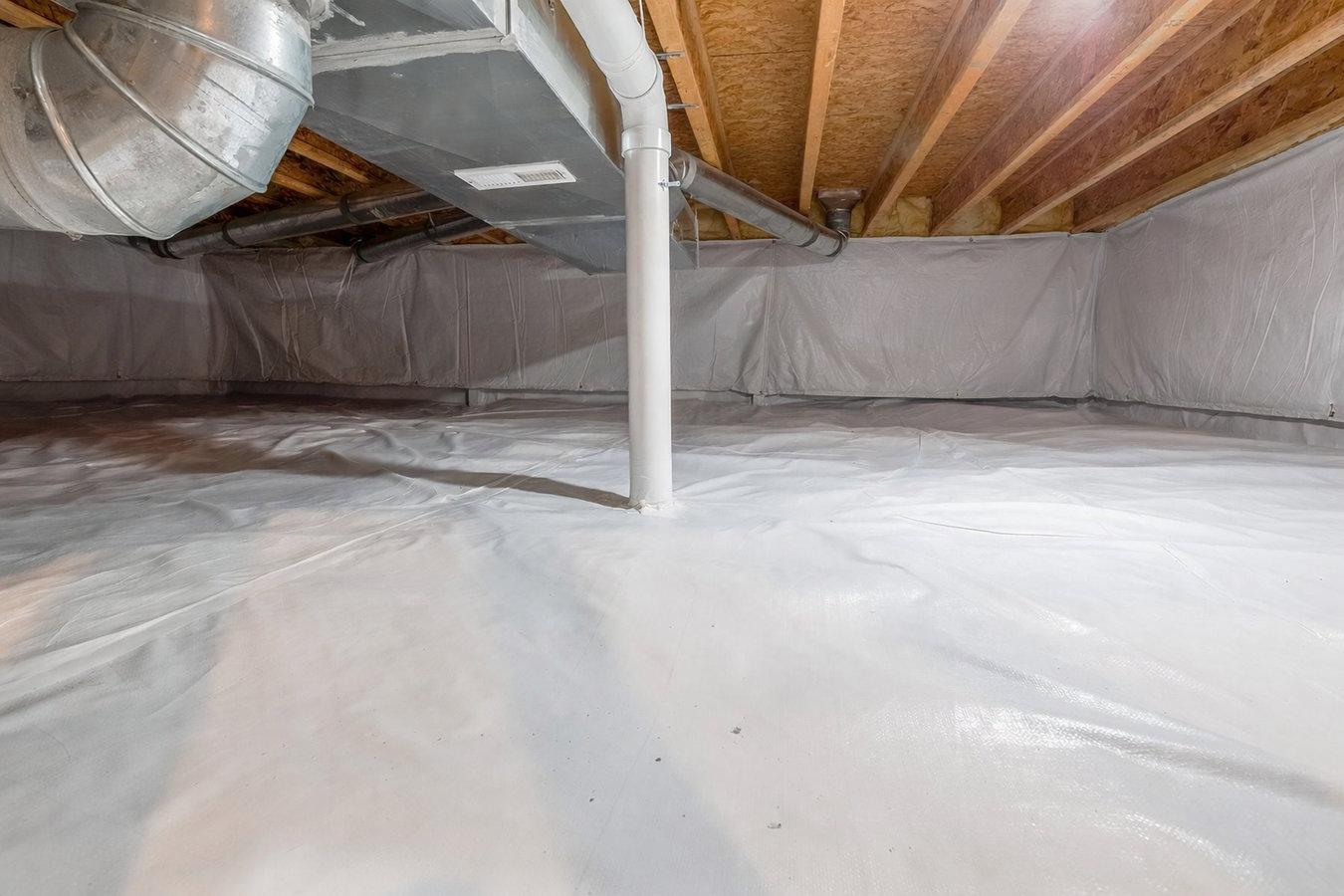
Vapor barrier installation in Charleston means laying heavy-duty polyethylene sheeting directly over the bare dirt or concrete of your crawl space, sealing every seam with tape, and fastening the edges up the foundation walls so moisture from the ground cannot escape into the air beneath your floors - most jobs finish in one day, and the barrier works from the moment it is installed.
Moisture that builds up under a Charleston home does not stay there. It moves upward into your subfloor, your wall framing, and eventually your living space, where it feeds mold and causes wood to soften and rot. Many homeowners only discover the damage when floors start to feel spongy or a musty smell becomes impossible to ignore - by which point repairs cost far more than the barrier would have. In Charleston, where the river valley location keeps ground humidity elevated year-round, this process happens in almost every unprotected crawl space. If you have also noticed drafts or uneven temperatures in your home, pairing this work with attic air sealing addresses the building envelope from top to bottom at once.
A vapor barrier is often the correct first step before crawl space vapor barrier upgrades or additional insulation work - because covering a wet crawl space with fresh insulation traps the problem rather than solving it.
These are the signs Charleston homeowners most commonly describe when they call us.
If your home develops a damp, earthy odor in late winter or early spring - especially in rooms on the ground floor - that smell is almost always coming from your crawl space. Charleston's wet winters and snowmelt season push moisture into the soil under your home, and without a barrier, that moisture and the odors it carries move straight up through your floors. This is one of the most common and most overlooked signs that your crawl space needs attention.
Walk slowly across your ground-floor rooms and pay attention to how the floor feels. If any spots feel softer than they should, or if you notice a slight bounce that was not there before, that can mean the wood framing beneath your floor has been absorbing moisture over time. In older Charleston homes - many of which have wood subfloors over crawl spaces - this kind of damage often starts years before it becomes visible.
When warm, moist air from a damp crawl space rises into your living space, it often shows up as condensation on cold surfaces - windows, pipes, or walls near the floor. If you notice this regularly during cooler months, the moisture is likely coming from below. This is especially common in Charleston homes during the fall and spring shoulder seasons when temperature swings are most dramatic.
A damp crawl space makes your home harder to heat and cool. Moisture in the air under your floors reduces the effectiveness of your insulation and forces your heating and cooling system to work harder. If your bills have gone up gradually and you cannot point to a clear reason, the crawl space is worth checking - especially in a Charleston home that has never had a proper moisture barrier.
For most Charleston homes, a standard crawl space vapor barrier - heavy-duty polyethylene sheeting covering the full floor with taped seams and fastened edges - resolves the moisture problem and protects the wood framing above. We use material thick enough to resist punctures from foot traffic and hold up for decades in a damp environment. Where the moisture problem is more persistent - homes with a history of flooding near the Kanawha River, or with very low crawl space clearance that traps humid air - we recommend a full crawl space vapor barrier encapsulation that includes wall coverage and, where needed, an active dehumidifier.
Homes with old, degraded plastic already in place benefit from a complete barrier replacement before any new insulation is installed. Thin material that was laid without sealed seams is not doing much to block moisture - it just makes it harder to see the bare dirt underneath. Every project starts with prep: clearing debris, checking drainage, and identifying any existing wood damage that should be addressed before the barrier goes down. Skipping prep is how moisture problems get sealed in rather than solved.
Standard installation for homes with a dirt-floor crawl space - covers the entire floor, seals all seams, and fastens up the foundation walls. The right starting point for most Charleston homes.
Adds wall and ceiling coverage to a sealed crawl space. Recommended for homes near the Kanawha or Elk River with a history of flooding or persistent high humidity even after a basic barrier.
Combines a sealed barrier with an active dehumidifier that controls the air inside the crawl space. Best for homes where moisture problems persist even with a ground barrier in place.
Removes old, degraded, or improperly installed plastic and replaces it with a properly sealed, heavy-duty barrier. Common in Charleston pre-1980 homes with thin or partially failed existing material.
Charleston sits at the confluence of the Elk and Kanawha Rivers, and the valley location means ground-level humidity here is persistently higher than in drier inland cities. The soil in low-lying parts of the city drains slowly and stays saturated longer after rain events - particularly in the neighborhoods closest to the river. A large share of the city's residential housing was built between the 1920s and 1970s, when crawl space moisture control was not a standard part of construction. That means thousands of Charleston homes have bare dirt crawl spaces that have never had any moisture protection installed. Homeowners across Charleston and Beckley who have owned their homes for years without addressing the crawl space are often surprised by how much damage has quietly accumulated below their floors.
West Virginia winters add a seasonal pressure on top of the baseline humidity. Freeze-thaw cycles from November through March push water into the soil around foundations, and the temperature difference between your warm living space and the cold crawl space below creates condensation that adds to the moisture already rising from the ground. Late summer or early fall is often the best time to schedule installation - you get it done before the wet season without competing with the spring rush of homeowners reacting to winter damage they have just discovered. The U.S. Department of Energy identifies ground moisture as one of the leading causes of energy waste and structural damage in homes with crawl spaces - and Charleston's climate makes that risk higher than average.
No surprises. Here is the process from first contact through a finished, documented installation.
When you reach out, we ask about your home's age, whether you have a crawl space or basement, and any specific problems you have noticed. Most reputable contractors in the Charleston area schedule an in-person assessment before giving a price - because crawl space conditions vary too much to quote accurately over the phone. We reply within one business day.
We visit your home and physically inspect the crawl space - checking size, clearance, standing water, existing damage, and the condition of any existing barrier or insulation. This visit usually takes 30 to 60 minutes. A good contractor walks you through what they found and explains their recommendation before you commit to anything.
After the assessment you receive a written estimate. This is the right time to ask how thick the material is, whether seams will be sealed, and what happens if mold or damage is found once work begins. If you are getting multiple quotes, make sure each covers the same scope so you are comparing apples to apples.
The crew clears debris, removes any old plastic, and lays the new barrier across the entire floor. Seams are overlapped and taped, and edges are fastened up the foundation walls. A typical Charleston home takes one full day. Before we leave, we photograph the finished work and walk you through what was done so you can confirm coverage yourself.
Free written estimate after an in-person inspection. No pressure, no obligation. We reply within one business day.
(304) 400-6869You get a free written estimate up front and documentation of the sheeting and coverage we install. That written record protects you if something goes wrong under your home - not just our word.
We never quote a vapor barrier job from a phone conversation. A contractor who can give you a price without seeing the crawl space is guessing. Every estimate we write starts with an in-person inspection so you get an accurate number - not a lowball that grows on installation day.
We have installed barriers in pre-1960 bungalows near the East End, on sloped hillside lots in South Hills, and in older brick homes along the river in Kanawha City. Each neighborhood presents different moisture challenges - knowing those differences makes for a better installation.
Before and after photos are taken on every installation. You can see exactly what was done, confirm that no bare soil is visible, and verify that seams are sealed - without having to crawl under your house yourself. That documentation is yours to keep.
Vapor barrier work is hidden from view the moment the job is done - which makes written documentation more important here than on most home improvement projects. A detailed record of the materials and coverage is a standard part of every installation we complete.
Answers to the questions Charleston homeowners ask us most about vapor barrier installation.
For permit questions specific to Kanawha County projects, contact the Kanawha County Building Department.
Seal air leaks at the top of your home to complement the moisture protection at the bottom - both matter for energy efficiency.
Learn moreFocused crawl space vapor barrier service for homes specifically dealing with ground moisture rising through a dirt-floor crawl space.
Learn moreCharleston's wet winters and humid summers put your crawl space under constant pressure. Call or submit a request today and get a free written estimate from an experienced local contractor.