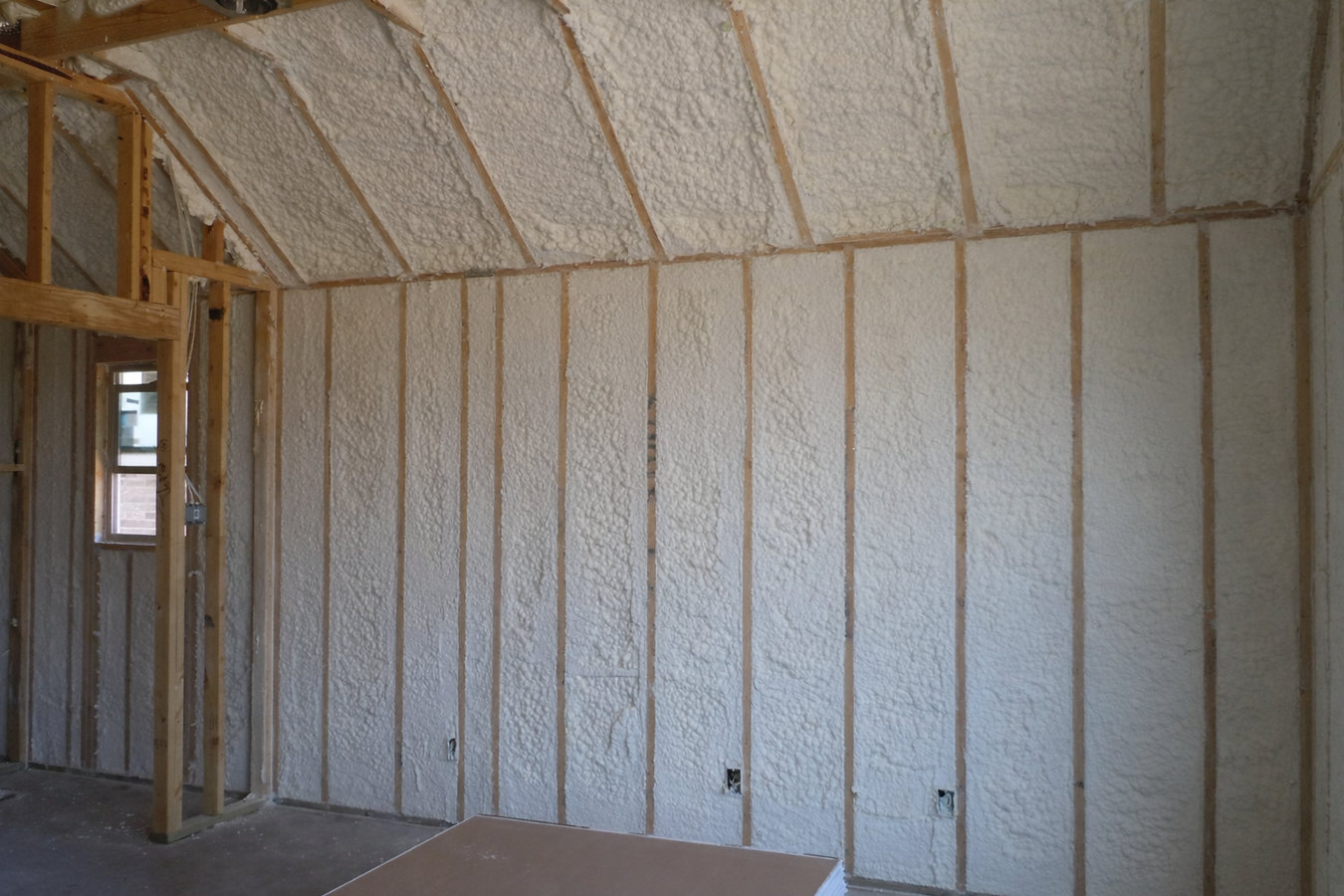
Drafty rooms, cold floors, and climbing energy bills often trace back to the same root cause. Closed-cell foam fixes the insulation and the air leak at the same time.
Closed-cell foam insulation in Charleston is sprayed as a two-part liquid that expands and hardens into a rigid, dense barrier - most jobs cover a crawl space, attic, or rim joist area in a single day, with a 24-hour curing period before re-entry.
Unlike fiberglass batts or blown-in material, closed-cell foam insulates and seals air in one application. That matters in Charleston because the city's older homes - especially those built before 1970 in Kanawha City, South Hills, and the East End - were never air-sealed when they were built. Cold air moves in through gaps around rim joists, basement walls, and crawl space foundations, and no amount of adding more insulation fixes an air leak. Foam stops both at once. If you are also dealing with moisture in a crawl space, this material pairs well with spray foam insulation as part of a complete lower-level solution.
These are the signs homeowners in Charleston describe most often before calling us.
If your kitchen or living room floor feels like ice in January even when the furnace is running, the crawl space below is likely uninsulated or unsealed. Charleston's winters push cold air up through unprotected crawl spaces, and turning up the thermostat doesn't fix that at the source.
Hold your hand near an electrical outlet on an exterior wall on a cold day. If you feel cool air, that is outside air leaking in through the wall cavity. This is common in pre-1970 Charleston homes that were built with little or no insulation. Foam seals those pathways without requiring a full wall teardown.
A musty smell rising through your floors, or visible moisture when you look under the house, means humid outside air is getting in. The Kanawha Valley's wet springs and humid summers make this a persistent issue. Closed-cell foam on crawl space walls and the rim joist area stops that moisture intrusion at the entry point.
If snow melts unevenly on your roof in winter, heat is escaping through the attic in patches. In Charleston's freeze-thaw cycle, that escaping heat can cause ice to form at the eaves and back up under shingles. Insulating and sealing the attic with foam addresses the cause, not just the symptom.
Closed-cell foam is the right material for the spots in your home where moisture resistance and maximum insulating power matter most. We apply it to crawl space walls and floors, basement rim joists, attic roof decks, and exterior wall cavities in older homes. In crawl spaces - which are common in Charleston's housing stock - foam applied to the walls and the band joist area stops cold air and moisture in a single pass. In attics, it can go on the roof deck to create a conditioned attic space, or on the floor to seal the air barrier above your living space. It pairs naturally with open-cell foam insulation in situations where different performance levels are appropriate in different zones of the same home.
For homeowners comparing options, closed-cell foam costs more per square foot than fiberglass or blown-in material - but it delivers a higher R-value per inch and doubles as a vapor barrier, which often eliminates the need for a separate moisture control step. In older Charleston homes where air leakage and moisture are both problems, that combination frequently makes it the most cost-effective solution over time. We will tell you honestly if a less expensive material will do the job just as well for your specific situation.
Best for homes with cold floors, moisture intrusion, or musty smells rising from below.
Best for homes with uneven heating, high energy bills, or visible ice dam issues in winter.
Best for older homes with drafty corners, cold basements, or pipes that have come close to freezing.
Charleston's climate sits at a difficult intersection. Summers are genuinely hot and humid - the Kanawha Valley traps warm, moist air at ground level through July and August. Winters bring temperatures that regularly drop into the single digits, with freeze-thaw cycles from November through March. Most insulation materials do one job or the other reasonably well. Closed-cell foam does both, and it also blocks moisture vapor in the same application. For the Spray Polyurethane Foam Alliance's technical resources on proper application, their site covers the performance standards contractors should be trained to meet. Homes across Charleston and Huntington face these same conditions, which is why foam is one of the most requested services across our full service region.
The age of Charleston's housing stock makes this especially relevant. A large share of the city's homes - particularly in South Hills, Kanawha City, and the East End - were built between the 1920s and 1960s with no meaningful air sealing and very little insulation in the walls or under the floors. Decades of settling have opened additional gaps. Those homes are exactly where closed-cell foam delivers the most noticeable improvement, because it addresses the insulation deficit and the air leakage in a single job. West Virginia also participates in federal weatherization programs, and it is worth asking whether your project qualifies for any assistance through the WV Office of Energy Weatherization programbefore you schedule work.
We ask what area of the home you want insulated, roughly how old the home is, and whether you have noticed moisture. You will hear back within 1 business day to set up your estimate visit.
We walk through the crawl space, attic, or other target area, take measurements, and look for moisture or access issues. You receive a written estimate before any commitment is made.
The crew arrives with spray equipment and mixes the foam on-site. A crawl space or attic can often be completed in a single day. You need to stay out of the treated area while work is happening.
Most re-entry windows are 24 hours after application. Once cured, we walk through the finished work with you and answer any questions before we leave.
Experienced local crews. Free written estimate. No obligation, no pressure.
(304) 400-6869Every project starts with a free written estimate that breaks down the material, board-foot coverage, and cost before any contract is signed. You see exactly what the job includes up front, so there is a clear record to hold us to before anyone starts work.
Closed-cell foam applied too thick in one pass can crack. Foam with gaps at edges or around pipes fails to seal. We follow the standards set by the Spray Polyurethane Foam Alliance and walk you through the finished job before we leave so you can see the coverage yourself.
We serve a 12-area regional footprint, including Charleston and surrounding communities. That regional presence means we understand the housing stock and climate conditions across the Kanawha Valley and beyond. We are not a company that learned the market from a franchise manual.
Closed-cell foam costs more per square foot than other materials. If a less expensive option will genuinely do the job just as well for your specific situation, we will tell you that in writing. Our reputation depends on giving you the right recommendation, not the most expensive one.
Between the technical demands of proper foam application and the permanent nature of the material, closed-cell foam is a job where contractor quality matters more than on most other insulation projects. That is why we invest in training, transparency, and a walkthrough at every job.
A lower-density foam option suited to interior walls and attic applications where moisture resistance is less critical than sound and thermal performance.
Learn moreA broader overview of both closed- and open-cell spray foam options and how each type fits different areas of your home.
Learn moreOur crews are booking now - lock in your date while the schedule is still open and before Kanawha Valley temperatures drop.