Under-insulated attics drive up energy bills every winter. We fill the gaps with blown-in insulation and air sealing so your home holds heat the way it should.
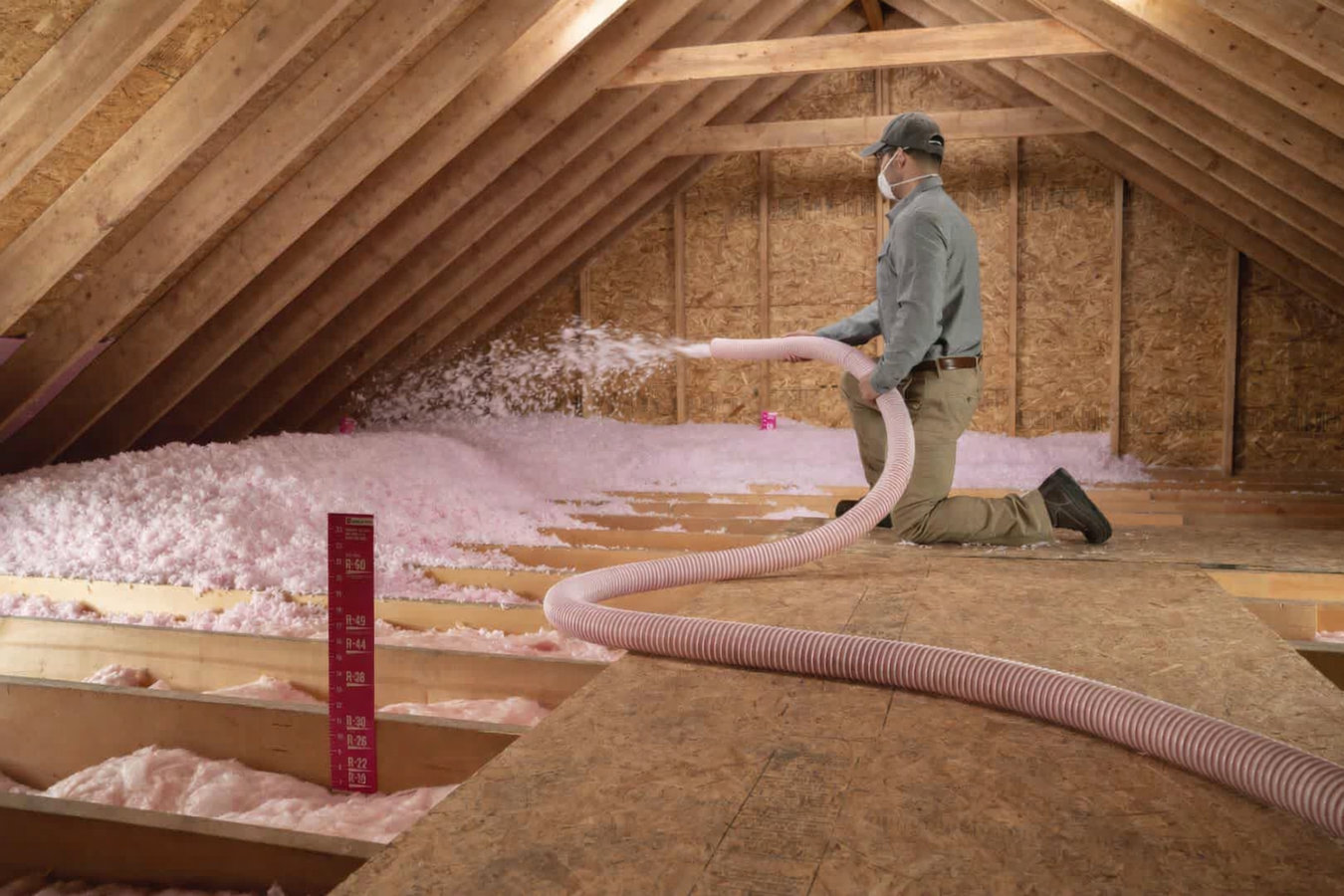
Blown-in insulation in Charleston fills attic floors and wall cavities with loose material - cellulose or fiberglass - that slows heat from escaping in winter and entering in summer. Most attic jobs are completed in a single day, often in just a few hours.
A lot of Charleston homes were built before modern insulation standards existed. If yours is one of them, the attic is the most common place heat goes missing every winter. Blowing in new material on top of what is already there is one of the fastest, least disruptive ways to fix the problem. Many homeowners also pair this work with attic insulation services to get a complete picture of what is happening in their attic before making any decisions.
Charleston sits in a climate zone where the Department of Energy recommends attic insulation between R-49 and R-60. That is 14 to 18 inches of blown-in material. Most older homes in Kanawha City, the East End, and South Hills have far less than that - sometimes only 3 or 4 inches that have settled over decades.
If your furnace runs constantly during Charleston's cold months but certain rooms never quite warm up, heat is likely escaping through your ceiling. An under-insulated attic can add hundreds of dollars to your annual heating bill, and the problem gets worse over time as existing material settles further.
If the top floor of your home feels noticeably colder than the ground floor in winter, or noticeably hotter in summer, heat is moving through your ceiling in ways it should not. This is especially common in Charleston's older two-story homes where attic insulation was minimal when the house was built.
When warm air escapes through an under-insulated attic, it heats the roof deck and melts snow from underneath. That water runs to the cold eaves and refreezes, forming ice dams that can damage gutters and leak into your walls. Charleston gets enough winter precipitation that ice dams are a real and recurring concern.
A large share of Charleston's housing stock dates to the mid-20th century, and homes from that era were built with insulation standards far below what is recommended today. If you can see the wooden ceiling joists clearly above the insulation when you look into your attic hatch, you do not have enough.
Blown-in insulation works in two main areas: attics and walls. Attic work is the most common - we blow cellulose or fiberglass material across your attic floor to reach the right depth for your climate zone. For older Charleston homes with little or no existing material, we also seal air gaps first so the new insulation performs as well as it should. If you have questions about overall comfort and heat loss across your whole house, our home insulation service covers a full assessment of every area that could be losing heat.
Dense-pack blown-in insulation also works in existing walls without tearing out drywall. We drill small access holes, pack the cavities, and patch the openings. It is a good option for Charleston homes where the exterior walls were left bare when the house was built. Every job includes a walkthrough and depth markers so you can see the finished work yourself.
Best for homes with accessible attic floors that need a significant boost in R-value.
Suits older homes with uninsulated or under-insulated wall cavities where tearing out drywall is not practical.
Made from recycled paper, denser than fiberglass, and a good choice for attics that need to hold heat in cold climates.
Lighter than cellulose and resistant to moisture absorption - good for attics with some humidity concerns.
Charleston sits in climate zone 5, where January lows average around 25 degrees Fahrenheit and cold snaps can last for weeks. That is cold enough that an under-insulated attic is something you feel every day from November through March. The city also has a high proportion of homes built before 1980 - many in neighborhoods like Kanawha City and the East End - that were constructed with insulation standards far below what is recommended today. Blown-in insulation is one of the most cost-effective upgrades available for these older homes because it does not require tearing anything out.
West Virginia homeowners also have access to federal energy efficiency tax credits for qualifying insulation upgrades, and the state has historically offered weatherization assistance for income-qualifying households through the WV Office of Energy. We serve homeowners across the area, including Huntington and Beckley, where many homeowners face the same older housing stock and under-insulated attics.
We will get back to you within 1 business day. We ask a few basic questions - home age, attic access, what prompted your call - so we come prepared. No commitment required to schedule the assessment.
We go into your attic, measure what is already there, check for moisture or air gaps, and give you a written estimate that explains exactly what we recommend and why. This visit is free.
One crew member works in the attic guiding the hose while another feeds material into the truck-mounted machine outside. Most attic jobs are done in two to four hours. Air sealing happens first if it is included in your quote.
We leave depth markers in your attic so you can verify the coverage yourself. You get documentation of the work done - useful for tax credits, utility rebates, and future home sales. Your home is ready to use immediately.
Free assessment. Written estimate. No obligation. We reply within 1 business day.
(304) 400-6869Our crews have spent years blowing insulation into Charleston's older homes, and we document the coverage and depth on every job. You get the full scope in writing before we start, so the work is tied to a clear record you can hold us to.
Most blown-in jobs skip the air sealing step. We do not. Sealing gaps and penetrations before adding material is what makes the biggest difference in performance - and what the DOE recommends before any insulation upgrade.
When we finish, you can see exactly what was installed. We leave calibrated depth rulers in the attic so you can walk up and verify coverage yourself. No guessing, no taking our word for it.
Appalachian Power and Mon Power both serve Charleston and have offered insulation rebate programs. We know the documentation requirements and can help you get the paperwork right so your rebate actually goes through. Visit
We work on homes all across Charleston and the surrounding area. Whether your house is in Kanawha City or up on the South Hills ridge, we know the construction patterns, the moisture conditions, and the gaps that older homes in this area tend to have.
The Department of Energy publishes guidance on recommended insulation levels by climate zone at energy.gov/energysaver/insulation. Federal tax credit information is available through ENERGY STAR.
A whole-home insulation assessment that covers your attic, walls, crawl space, and basement in one project.
Learn moreDedicated attic insulation services including removal of old material, air sealing, and full re-insulation.
Learn moreAttic temperatures are still manageable - schedule now before the heating season hits and openings fill up fast.