Stop paying to heat and cool the outdoors. Charleston Insulation Company installs open-cell and closed-cell spray foam in attics, crawl spaces, walls, and rim joists. Experienced local crews. Free estimates. No-pressure process.
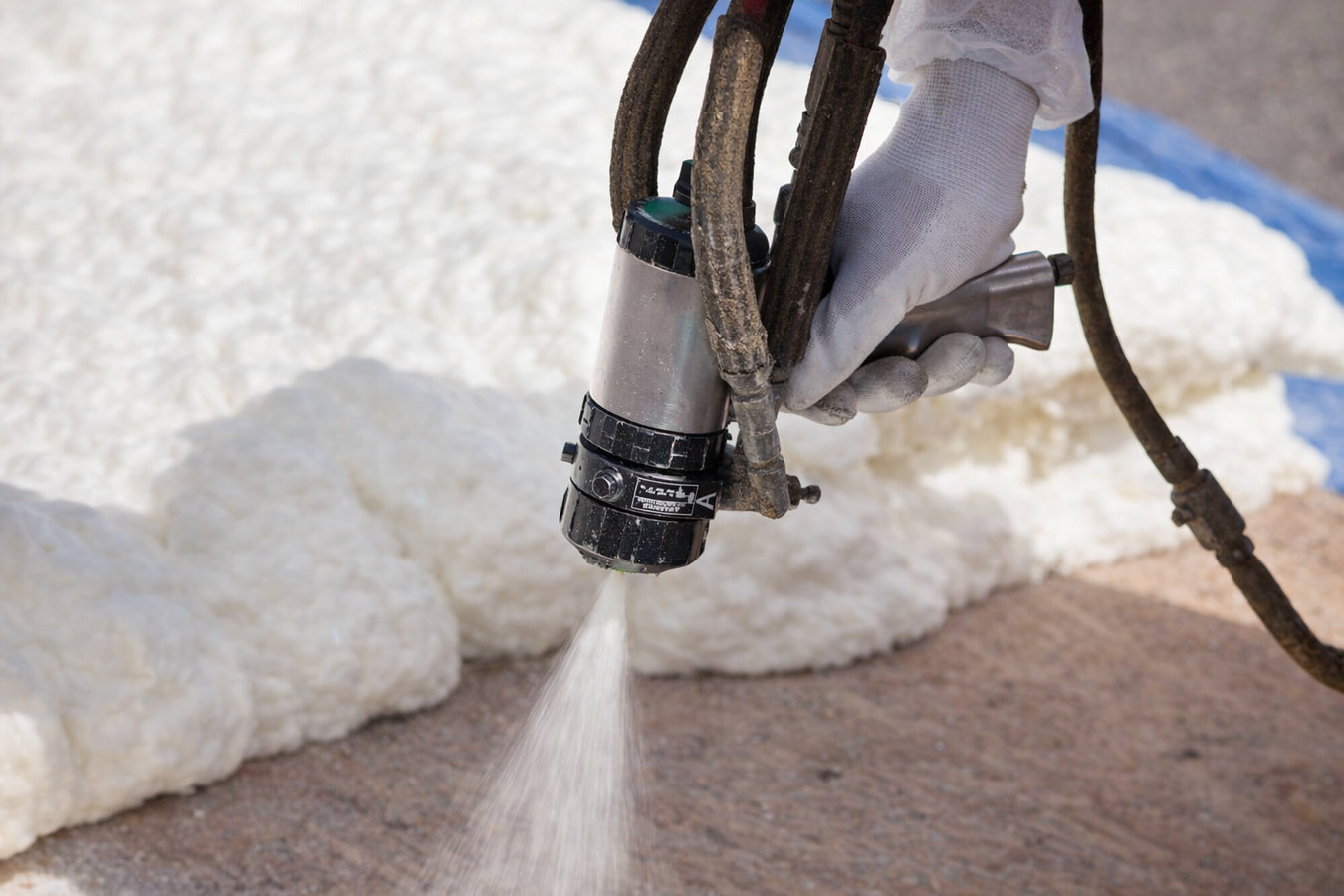
Spray foam insulation in Charleston seals air leaks and insulates in a single step - most jobs cover a crawl space or attic in one day. Two liquid chemicals are mixed on-site, sprayed onto surfaces, and expand into a hard foam that fills gaps around pipes, wires, and framing while building up an insulating layer.
That combination is what separates spray foam from older materials like fiberglass batts. Fiberglass slows heat transfer. Spray foam does that, and it fills the air pathways where conditioned air actually escapes. For most homeowners, those air leaks are where the biggest comfort and energy improvements come from. If your home has drafts, uneven room temperatures, or climbing utility bills, attic insulation paired with spray foam air sealing is often the highest-impact place to start.
The U.S. Department of Energy rates closed-cell spray foam at R-6 to R-7 per inch - among the highest of any insulation type. Open-cell foam runs R-3.5 to R-3.8 per inch, competitive with fiberglass but with the air sealing built in.
These are signals you can recognize without hiring anyone. If one or more apply to your home, it is worth a free assessment.
If your heating bill in January or cooling bill in July feels out of proportion to your home's size, poor insulation is one of the most common causes. Charleston winters regularly push into the teens and twenties. Bills that creep up year over year without explanation usually point to the attic or crawl space.
Walk through your home on a cold morning and notice whether certain rooms feel noticeably colder, or whether you feel a chill near exterior walls or around window and door frames. These drafts are a sign conditioned air is escaping through gaps spray foam is specifically designed to seal - especially common in Charleston's older homes.
Charleston's river valley humidity puts crawl spaces under constant moisture pressure. A musty smell from your floors, condensation on pipes under the house, or discoloration on floor joists are signs moisture is already getting in. Spray foam on the crawl space walls and rim joists can stop that cycle before it becomes a mold or structural problem.
A large portion of Charleston's housing stock predates modern insulation requirements. If your home is more than 40 years old and no one has ever looked at the attic or crawl space, there is a reasonable chance you are losing significant heat and money every month. A quick visual check of your attic - looking for thin or absent insulation - can tell you a lot.
We install both open-cell and closed-cell spray foam depending on where the foam is going and what problem we are solving. Crawl spaces and basement rim joists get closed-cell foam because it resists moisture movement in addition to insulating - important in a climate as humid as Charleston's. Interior walls and attic decking where moisture is not the primary concern are often a good fit for open-cell foam, which is also more cost-effective per square foot.
Spray foam pairs well with a broader upgrade. If your attic floor needs coverage after the air sealing is done, we discuss attic insulation in the same conversation. For homeowners who need the highest possible performance in a tight crawl space or basement rim joist, closed-cell foam insulation is the right spec - R-6 to R-7 per inch with a built-in vapor barrier.
Best for crawl spaces, basement rim joists, and any location where moisture is a concern. Dense, hard, moisture-resistant, and R-6 to R-7 per inch. Acts as a vapor barrier in addition to insulating.
Best for interior walls and attic applications where sound dampening matters and moisture is not the primary concern. R-3.5 to R-3.8 per inch. More cost-effective than closed-cell for the right locations.
Closed-cell foam applied to crawl space walls and rim joists creates a sealed environment that blocks cold air infiltration and resists the river valley humidity Charleston homes deal with year-round.
Spray foam applied to attic decking or rim joists seals the gaps around pipes, wires, and framing where conditioned air escapes - the first step before adding attic insulation coverage.
Charleston sits in a river valley with hot, humid summers and cold, wet winters. That climate puts homes under constant moisture and temperature pressure - especially older homes that were built with minimal or no crawl space insulation. The combination of humidity working into crawl spaces from below and heat escaping through attics from above means many homes here are leaking energy from multiple directions at once. Homeowners in Charleston with pre-1980 housing stock are particularly likely to see immediate, noticeable improvements after spray foam is installed.
The hilly terrain here also means many homes were built on sloped lots with irregular, sometimes very shallow crawl spaces underneath. These tight spaces are harder to work in and require a contractor who takes the time to assess the space before quoting - not one who gives a phone estimate and shows up unprepared. Homeowners across the region, from neighborhoods in Charleston to communities like Huntington, deal with the same combination of older housing and humid climate that makes spray foam one of the most effective upgrades available.
We ask a few basic questions - what part of the home you are concerned about, what problems you have noticed, and roughly how old your home is. We respond within 1 business day and most scheduling happens within the week.
A contractor walks through your attic, crawl space, basement rim joists, or interior walls. We measure what is already there, check for moisture or mold issues that need to be addressed first, and explain what we recommend. No obligation after this visit.
After the assessment you receive a written estimate that breaks down the area to be covered, the type of foam recommended, and the total cost. We explain every line. The number on your final invoice matches the number you agreed to.
Most residential jobs are completed in a single day. Plan for everyone in the household - including pets - to be out during the work and for at least 24 hours afterward while the foam cures. We leave you with written documentation of everything installed.
We respond within 1 business day. There is no obligation after the assessment visit - we walk through your attic or crawl space, explain what we find, and give you a written quote. Call or submit online and someone from our office will reach out to schedule.
(304) 400-6869Every spray foam project starts with a free written estimate that breaks down the foam type, coverage, and cost. You see exactly what the job includes before signing anything, so there are no surprises on the invoice.
We walk you through the finished work before we leave and hand you written documentation of what was installed and where. If you ever sell your home or need to file a warranty claim, you have a clear record - not just a receipt.
Charleston's humidity means crawl space moisture problems are common, and covering up a moisture problem with new insulation makes it worse. We inspect for moisture and mold before any foam goes in - so you are not paying for a fix that creates a bigger problem.
We give you a detailed written estimate before any work begins and explain in plain language what each part of the job involves. The number on your final invoice matches the number you agreed to. No surprises after the job starts.
Charleston Insulation Company is a local West Virginia spray foam insulation contractor serving homeowners across the Charleston area. Every job gets the same process: a physical assessment before quoting, transparent pricing, and written documentation when the work is done. The Spray Polyurethane Foam Alliance sets the industry standards for application quality and safety that guide our work on every project.
Complete attic coverage using blown-in or batt materials - often paired with spray foam air sealing on the same visit.
Learn moreClosed-cell foam delivers R-6 to R-7 per inch plus a built-in moisture barrier - the right spec for crawl spaces and rim joists in West Virginia's humid climate.
Learn moreCall today or submit a request online - we respond within 1 business day and the estimate is free with no obligation.