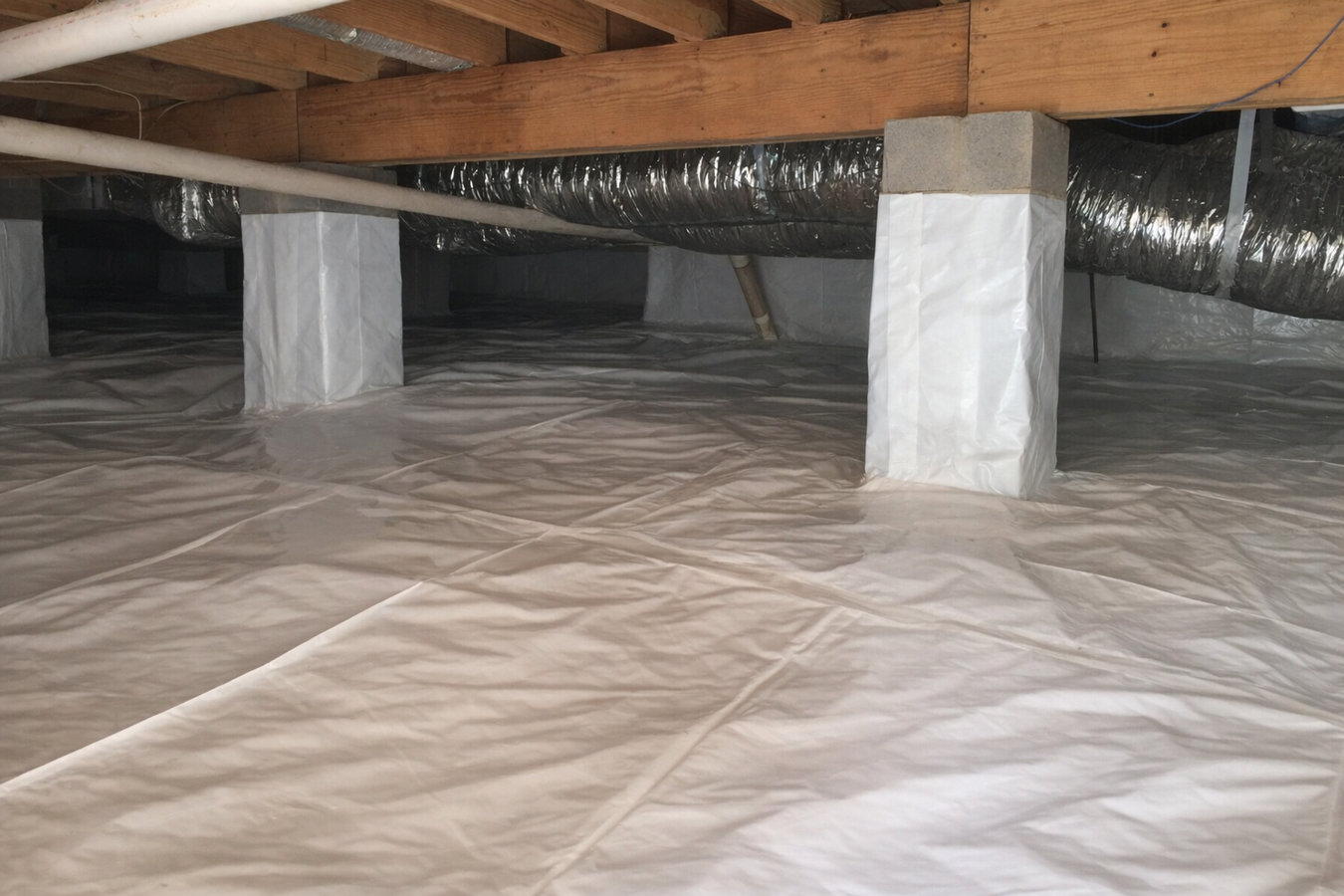
Ground moisture rising through an unprotected crawl space quietly damages your floors, framing, and air quality. A properly installed vapor barrier stops it at the source - before the damage becomes expensive.
A crawl space vapor barrier in Charleston is a thick plastic liner laid across the bare dirt floor of your crawl space and sealed up the foundation walls - most installations take one day, and the barrier begins working the moment it is in place by blocking ground moisture from rising into your floor joists and subfloor.
Without a barrier, the soil beneath your home acts like a wick. Moisture from the ground moves upward continuously, soaking into wood framing, encouraging mold growth, and carrying that earthy smell into your living space. In Charleston, where the Kanawha River valley keeps ground moisture elevated year-round, this process happens in almost every untreated crawl space. Many homes across Kanawha City and the East End were built in an era when crawl space moisture protection was not part of standard construction, and their crawl spaces have been accumulating damage ever since.
A vapor barrier is often the first step before crawl space insulation - because insulating over a wet crawl space traps the problem rather than solving it. We assess your crawl space thoroughly before any material goes down.
Most warning signs are easy to spot from inside your home - no crawling required.
If sections of your wood floor flex slightly when you walk on them or feel softer than they used to, that is often a sign the wood underneath has been absorbing moisture over time. In Charleston's older homes, this is one of the most common early warnings that the crawl space has been wet for a long time. Soft floors can progress to structural damage that costs far more to fix than a vapor barrier.
A persistent musty or earthy smell in your home - particularly noticeable first thing in the morning when the house has been closed up overnight - often traces back to a damp crawl space. Because air moves upward through your home, odors from below travel with it. In Charleston's humid summers, this smell tends to get stronger between June and September.
If you have peeked into your crawl space and noticed water droplets on pipes, metal ductwork, or the underside of your floor, moisture levels down there are too high. That condensation is the same moisture that eventually works its way into your wood framing. It is a clear, visible warning sign that the crawl space needs attention before the damage reaches the wood.
When a crawl space is damp, the moisture it releases makes your home harder to heat and cool efficiently. If your energy bills have been climbing gradually and you cannot point to a clear cause, a wet crawl space could be part of the reason. This is especially common in Charleston homes that sit on older, uninsulated crawl spaces with no moisture barrier installed.
For most Charleston homes, a standard vapor barrier - heavy-duty polyethylene sheeting covering the entire floor with sealed seams and fastened edges - resolves the moisture problem and protects the wood framing below. We use material thick enough to resist punctures and last for decades without replacement. For homes with a history of high humidity or flooding, we recommend pairing the barrier with a full vapor barrier installation that includes wall coverage and, where needed, a dehumidifier to actively manage the air inside the space.
Older homes with thin, torn, or improperly laid plastic from a previous installation benefit from a complete barrier replacement before any new insulation work begins. We also handle full crawl space encapsulation for homes near the Kanawha or Elk River that face elevated ground moisture. Every project includes prep work - debris removal, drainage assessment, and flagging any existing wood damage - before the barrier goes down.
Heavy-duty polyethylene sheeting covering the full crawl space floor, with sealed seams and edges fastened to the foundation walls. Works well for most Charleston homes with moderate moisture.
Covers the floor, walls, and sometimes the ceiling of the crawl space for complete moisture control. Best suited for homes near the Kanawha or Elk River with a history of flooding or persistent dampness.
Combines a sealed barrier with an active dehumidifier to control air moisture inside the crawl space. Recommended for homes where a barrier alone is not enough to keep humidity in check.
Removes old, degraded, or improperly installed plastic and installs a fresh barrier built to current standards. Common in Charleston homes built before 1980 with thin or torn existing material.
Charleston sits at the confluence of the Elk and Kanawha Rivers, and the valley location keeps humidity elevated throughout the year - not just during summer, but through wet winters and heavy spring rains as well. The soil in low-lying parts of the city drains slowly and stays saturated longer after rain events, meaning the moisture pressure on crawl spaces near the river is higher than average. Homes in Charleston and Huntington that were built before moisture standards caught up - many between the 1920s and 1970s - were never given any protection, and their crawl spaces reflect decades of unaddressed moisture accumulation.
West Virginia winters add another dimension to the problem. When temperatures drop in January and February, the temperature difference between your warm living space and the cold, damp crawl space below creates condensation - similar to what happens on a cold glass on a humid day. That condensation accelerates wood rot and mold growth on top of the moisture already rising from the ground. For homeowners in Charleston's established neighborhoods, installing a vapor barrier before winter arrives is one of the most effective things you can do to protect your home's structure. The EPA recommends controlling moisture at the source as the primary strategy for preventing mold in residential buildings - and in Charleston homes, the crawl space floor is almost always that source.
The process is straightforward. Here is what to expect from the first call through installation.
When you reach out, we ask a few basic questions - your home's age, whether you have noticed specific problems like musty smells or soft floors, and whether anyone has worked in the crawl space before. We reply within one business day. You do not need to know anything technical to start this conversation.
Before giving you a price, we go into the crawl space and look around. We check for standing water, existing damage, how much debris needs clearing, and how accessible the space is. This is what separates an accurate estimate from a guess - we never quote before we look.
After the inspection you receive a written estimate covering what work is included, what thickness of material will be used, and what prep work is part of the job. Every line is explained before you approve anything. Ask as many questions as you need.
The crew clears debris, lays the barrier across the entire floor, seals seams with tape, and fastens edges to the foundation walls. Most Charleston homes take four to eight hours. Before we leave, we walk you through what was done - or show you photos - so you can verify the finished work yourself.
Free estimate, no obligation. We inspect the crawl space before we quote, and we reply within one business day.
(304) 400-6869Our crews have spent years installing vapor barriers in Charleston crawl spaces, and we put the full scope in writing before we start. You get documented work you can point to later - which matters when someone is doing work under your home that you cannot easily see.
Clearing debris, checking drainage, and flagging existing wood damage before the barrier goes down is what separates a lasting installation from one that seals problems in. Every job starts with a thorough crawl space prep - it is written into every contract, not an add-on.
We have installed barriers in older brick homes near the river in Kanawha City, on steep hillside lots in South Hills, and in pre-1960 bungalows across the East End. Local housing stock varies, and knowing those differences means a better installation for your specific home.
Every installation is photographed before and after. You do not have to take our word for it - you can see the finished work yourself or confirm the coverage with the photos we leave behind. No bare dirt, no unsealed seams, no guessing.
Every one of these proof points matters more when the work is hidden from view. A vapor barrier is one of the few home improvements you cannot evaluate just by looking at it from the outside - which is exactly why the contractor you choose needs to be one you can verify and trust before they start.
Answers to what Charleston homeowners ask us most about vapor barriers.
For crawl space moisture guidance, the EPA Energy Star program offers independent guidance on crawl space best practices.
Broader vapor barrier solutions for basements and other areas of your home beyond the crawl space.
Learn moreOnce moisture is controlled, insulating the crawl space walls or floor joists brings your energy efficiency up to where it should be.
Learn moreGround moisture does not wait, and neither should you. Call or submit a request today and get a free written estimate from an experienced Charleston contractor.