Cold floors, rising energy bills, and damp basement walls are signs your home is losing heat and letting moisture in. We fix that.
Basement insulation in Charleston creates a thermal barrier between your unheated basement and your living space - most jobs take one to two days and cover the walls, ceiling, or both, depending on how your home is set up.
If your floors feel cold in January or your heating system runs constantly without the house ever warming up, your basement is likely where that energy is disappearing. Charleston homes - especially older ones in Kanawha City, South Hills, and the East End - were often built with little or no basement insulation. That gap between what was built and what your home actually needs is exactly what we address. If moisture is part of the picture, we can pair basement insulation with crawl space insulation to seal the whole lower envelope of your home.
Most homeowners notice one of these warning signs before they call us.
If your kitchen or living room floor feels noticeably cold through your socks in January, that cold is rising from an uninsulated basement below. Charleston winters push temperatures into the 20s, and without a thermal barrier, that cold air moves straight up into your living space.
If your heating and cooling costs have crept up year after year but nothing obvious has changed, your basement is likely pulling heat out of your home around the clock. An uninsulated basement works against your HVAC system every single day, in every season.
A damp or musty smell after rain, or condensation on basement walls, means moisture is getting in and staying in. Charleston's humid summers and river valley location make this common. Insulating over moisture traps it against your walls - the moisture issue needs to come first.
Given Charleston's flooding history along the Kanawha and Elk Rivers, many homes have had water in the basement at some point. Wet fiberglass insulation loses effectiveness and can harbor mold even after it appears dry. If your home was affected by flooding, existing insulation should be inspected before anything new goes in.
We install basement insulation on walls, ceilings, and rim joists using the material that fits your home best. For finished basements or spaces used as living areas, wall insulation keeps the temperature comfortable year-round. For unheated basements used mainly for storage, insulating the ceiling above - which is the floor of your living space - delivers the biggest comfort improvement without conditioning a space you don't use. In homes with both a basement and a crawl space, we often pair this work with crawl space insulation to seal the full lower level.
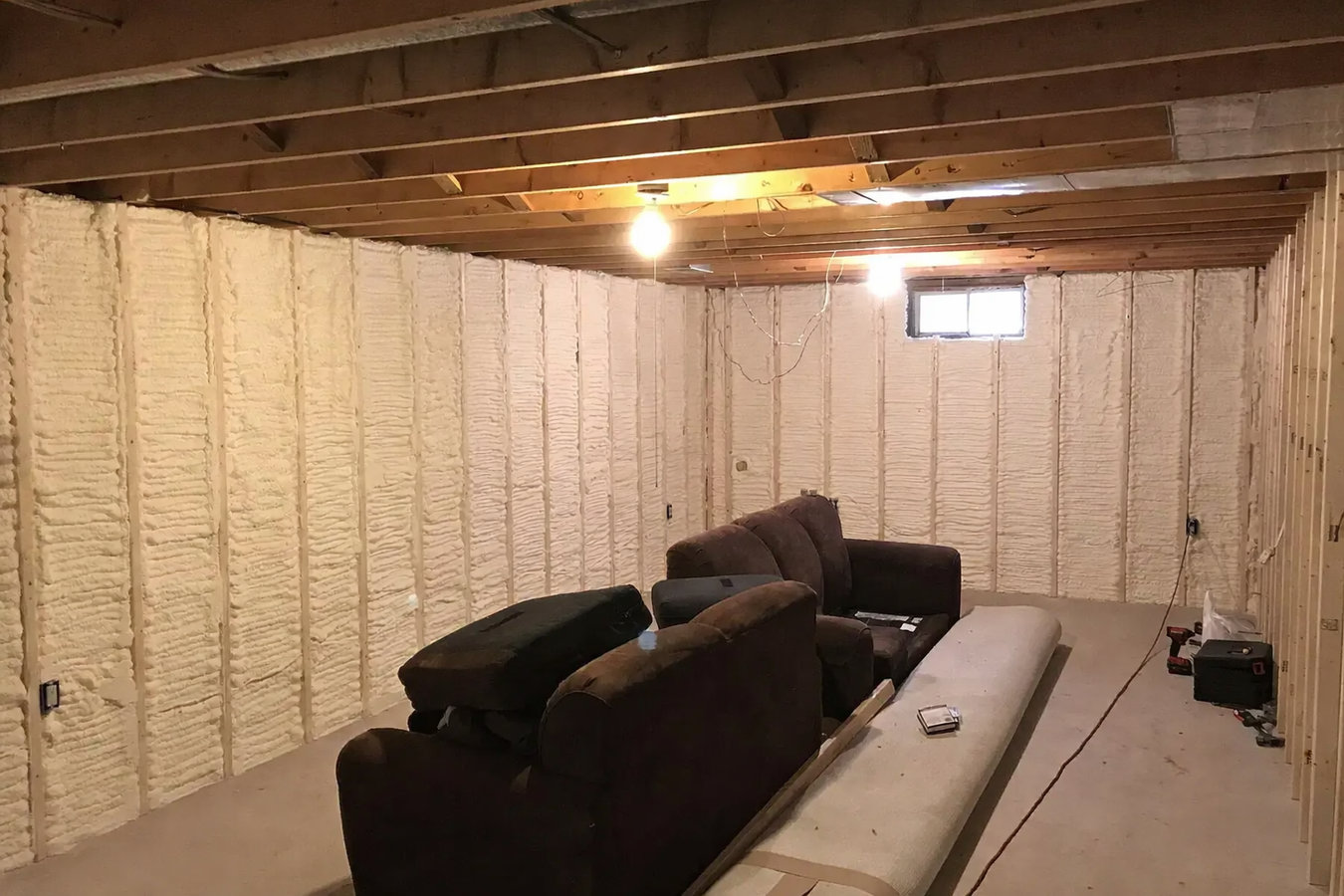
Material choice matters. We use fiberglass batts, rigid foam board, and closed-cell foam insulation depending on what your basement needs. Closed-cell foam is the strongest option for older Charleston homes with moisture history - it insulates and acts as a vapor barrier at the same time. Rigid foam board is a solid middle-ground choice for drier basements. Fiberglass batts are a budget-friendly option in spaces where moisture is not a concern.
Best for finished or semi-finished basements used as living or work space.
Best for unheated basements, stops cold floors above without conditioning unused space.
Best for homes with significant drafts or cold corners near the foundation edge.
Charleston sits in the Kanawha River valley, which means the city's climate throws two challenges at every home: hot, humid summers and cold winters with temperatures that regularly drop into the teens. That combination puts constant pressure on an uninsulated basement - warm, moist summer air condenses on cool basement walls, and winter cold pushes straight up through unprotected floors. The brief from the Department of Energy is clear: a properly insulated and air-sealed basement can cut heating and cooling costs by 10 to 20 percent annually. For a DOE guidance page on basement insulation, you can see exactly why wall and ceiling placement both matter depending on how the space is used.
A large share of Charleston's homes were built before 1970 - including most homes in neighborhoods like Kanawha City and the Huntington corridor. These homes were built with little or no basement insulation, and decades of settling have opened up gaps at the rim joists and around pipes. Add in Charleston's flooding history along the Kanawha and Elk Rivers, and many basements have had moisture exposure that degraded whatever insulation they had. We assess for moisture before recommending any material, because insulating over a moisture problem always makes it worse.
We will ask about your basement size, whether it is finished, and any moisture or flooding history. You will hear back within 1 business day to schedule your estimate.
We inspect the basement, check for moisture and air leaks, and measure the space. You receive a written estimate that breaks down materials and labor - no surprise numbers.
Clear stored items from the walls before the crew arrives. Most jobs take one to two days. If spray foam is used, the basement stays off-limits for a few hours while it cures.
We walk through the finished work with you before we leave. You can point out anything that looks off, and we answer any follow-up questions on the spot.
Experienced local crews. Free written estimate. No pressure, no obligation.
(304) 400-6869Every basement project starts with a free written estimate that breaks down materials, coverage, and cost before any contract is signed. You know exactly what the job includes up front, so there are no surprises on the invoice.
We check every basement for active moisture before recommending a material. Charleston's flooding history and river valley humidity mean moisture is a real factor in many older homes. Insulating over a moisture problem makes it worse - we will not do that.
We work across a 12-area service region, so we know the difference between conditions in Kanawha City and conditions in Huntington or Beckley. Local knowledge changes how a job gets done. We are not a franchise that parachutes in from out of state.
Appalachian Power offers rebates for qualifying insulation upgrades. We know the current programs and can help you understand whether your project qualifies before you sign anything. A few minutes of that conversation can meaningfully reduce your out-of-pocket cost.
Every job we do comes with a written estimate, a walkthrough at completion, and a contractor you can verify before work starts. That combination of accountability and local knowledge is what keeps Charleston homeowners calling us.
The highest-performance insulation option for moisture-prone spaces, sealing air leaks and blocking humidity in one application.
Learn moreSeal the crawl space walls and floor to stop cold air from rising through your floors and moisture from entering below.
Learn moreCharleston winters don't wait - lock in your installation date before cold weather sets in and the schedule fills up.